How much can your kids really learn while travelling?
I ask myself this a lot. And I mean a lot.
When you pull your kids out of the only education system you’ve ever known, put them on a plane, and choose a completely different path… you want to be sure you’ve thought it through. You want to know the potential repercussions. You want to be confident in your reasons. And you need to keep coming back to your why.
Because anytime you choose something that goes against the grain, people will have questions. Sometimes they’re curious. Sometimes they’re concerned. Sometimes they’re quietly piecing together your motives and wondering if you’ve lost your mind.
Thankfully, alternative education is becoming far more understood now. Homeschooling is no longer seen as fringe — it’s growing, it’s evolving, and in our experience, our biggest supporters have often been teachers themselves.
But the truth is, our “why” was never about convincing other people.
It has always been about what we believe is best for our children and our family.
We hold ourselves accountable with every destination. We don’t just travel aimlessly — we think, we plan, we map out experiences. We ask:
What can this place teach them?
Who can they learn from here?
How will this stretch them?
What might it open their eyes to?
And we don’t believe learning only happens through textbooks.
We intentionally engage with local people — in their work, in their culture, in their daily lives. Because we want our kids to grow up with a global perspective. With kindness. With compassion. With an understanding that the world is much bigger than their own comfort zone.
In the words of Atticus Finch, we want them to “walk around in other people’s shoes for a while.”
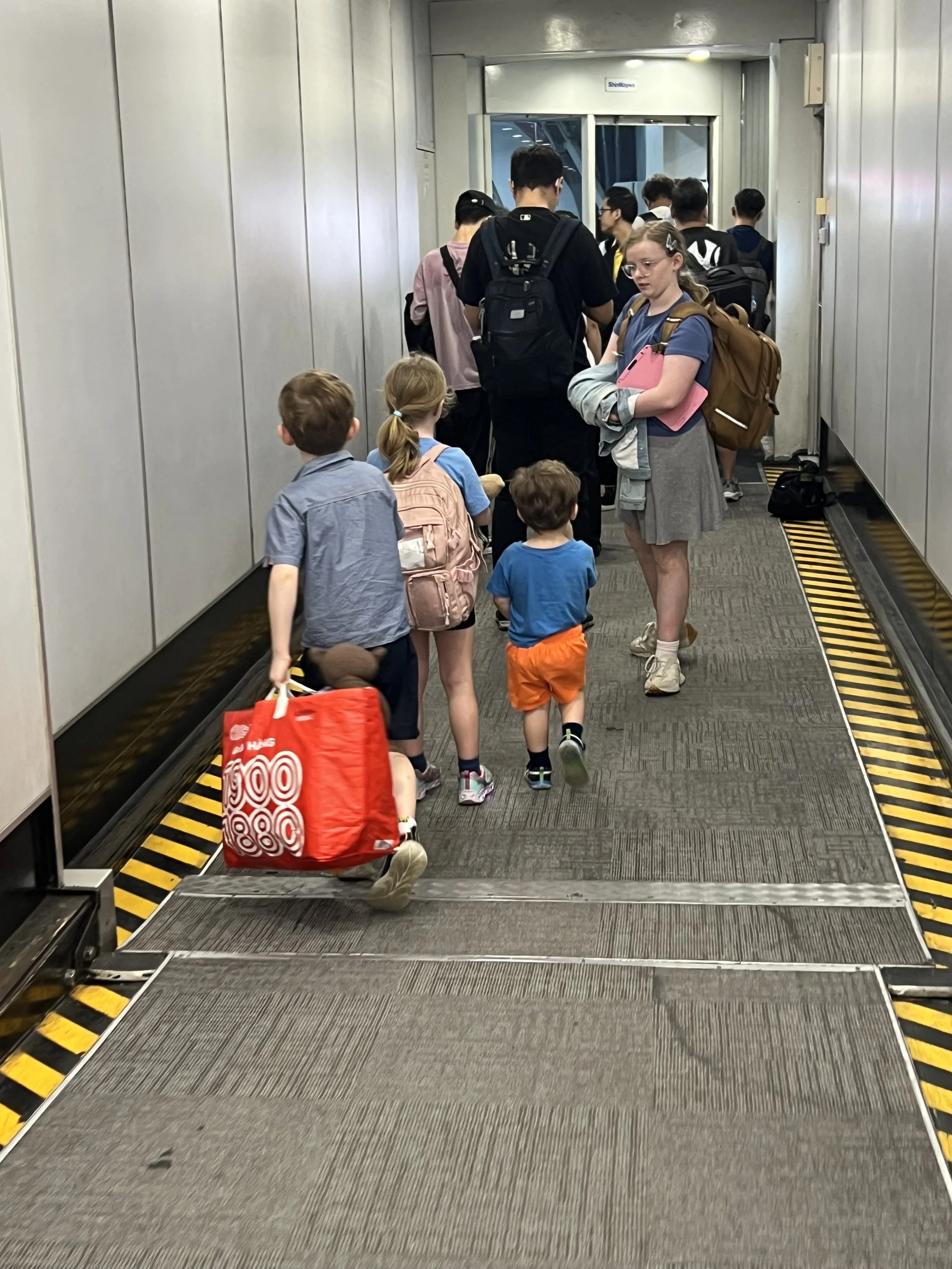
Our kids are experienced little travellers, they all understand that everyone needs to help with luggage on travel days, even the little ones.
We want them to taste new food, hear different languages, smell unfamiliar spices, navigate foreign streets, adapt to change, experience discomfort, solve real problems, build resilience, and develop confidence.
Because that is education too.
Arguably, in many ways, it’s the kind that sticks the longest.
Yes, times tables matter. Literacy matters. Structure matters. And for us, staying aligned with the Australian Curriculum is important. If our kids ever choose to step back into mainstream schooling, we don’t want them to feel behind their peers. That accountability matters to us.
But education is so much more than worksheets.
Travelling teaches:
Adaptability
Communication
Emotional intelligence
Cultural awareness
Problem-solving
Independence
Gratitude
Resilience
Perspective
Curiosity
Empathy
Our kids don’t just learn about geography — they stand in it.
They don’t just learn about history — they walk through it.
They don’t just read about different lifestyles — they witness them firsthand.
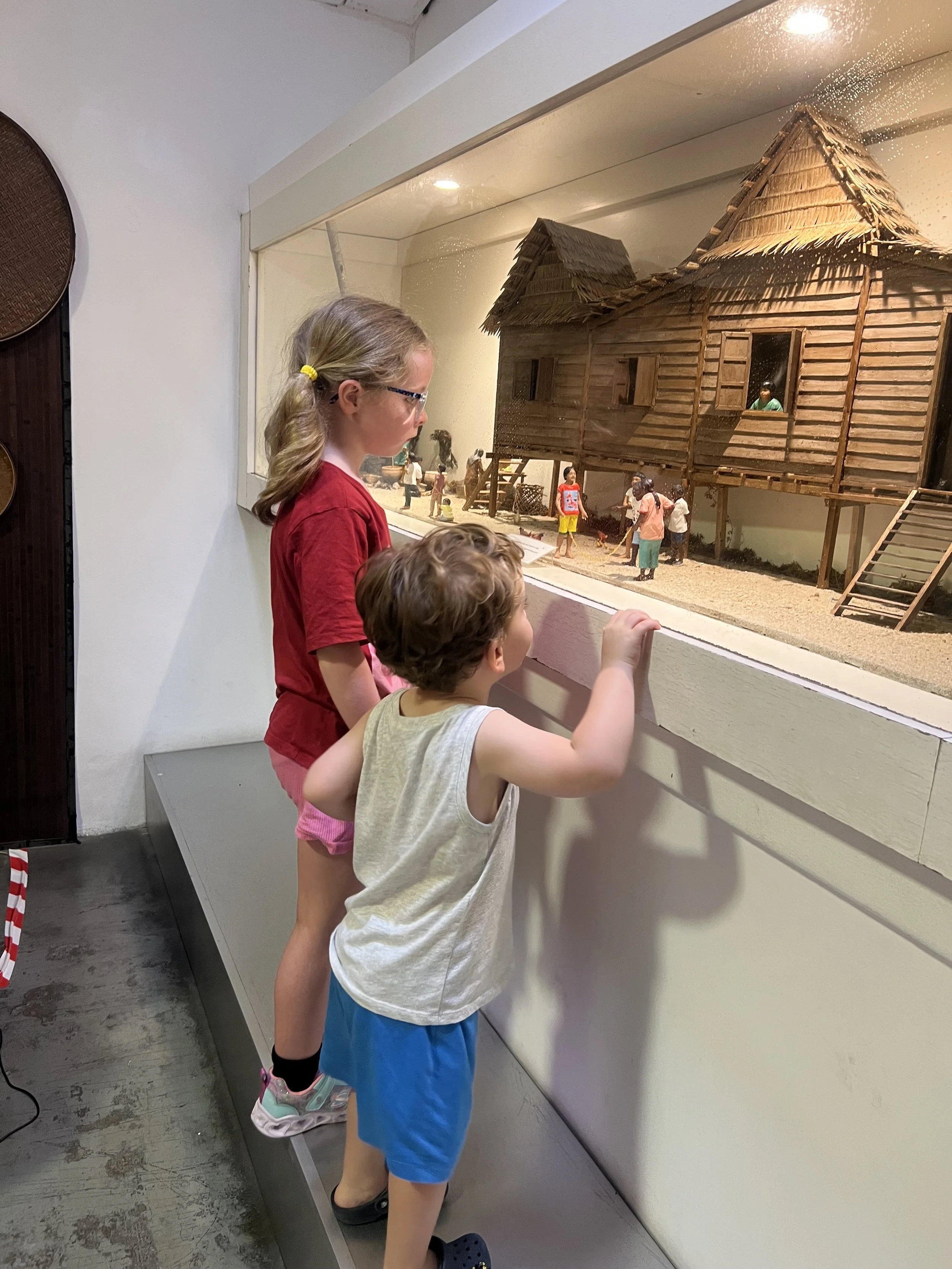
Maddie and Micah looking at one of the cultural displays at a museum we recently visited in Penang.
They’ve learned how to speak to adults confidently.
How to navigate airports and public transport.
How to manage money.
How to handle disappointment when plans change.
How to be flexible when things don’t go to plan (which is often).
How to connect with people who don’t look, live, or think like they do.
And perhaps most importantly — they’re learning who they are.
Their interests.
Their strengths.
Their struggles.
Their values.
Their voice.
That’s not something you can measure with a test.
Travelling with kids isn’t always easy. It’s messy, tiring, and often chaotic. It requires intention. It requires reflection. It requires constantly reassessing whether the path you’re walking still feels right.
But every time we stop and look at the humans our children are becoming — thoughtful, curious, compassionate, adaptable — we’re reminded of our why.
And for us, that’s more than enough.