Is Food Expensive in Japan? Our Honest Experience as a Family of Six
One of the questions people say to us regularly is you guys are budget travellers, isnt Japan expensive, "Is Japan expensive for food?"
And honestly?
The answer is both yes and no.
If you're eating every meal in tourist restaurants (hello wagyu beef), grabbing food only once everyone is already tired and hungry, and buying whatever happens to be closest at the time, Japan can start to feel expensive pretty quickly.
But if you know a few simple tricks, Japan can actually be one of the easiest countries we've travelled in when it comes to feeding a family.
And one of the healthiest too.
Before arriving, I expected food to be one of our biggest expenses. What surprised me most was just how many affordable, fresh, and convenient food options are available everywhere. In many cases, we've actually found food cheaper than back home in Australia.
After spending the past few months travelling around Japan as a family of six, these are some of the things that have helped us keep food costs down without feeling like we're missing out.
Make Lunch Your Main Meal
This is probably the biggest money-saving tip we've discovered.
Many restaurants in Japan offer lunch specials (lunch sets) that are significantly cheaper than their dinner menus. We regularly see lunch sets for around 990 yen (roughly AUD $10).
The best part?
It's often the same restaurant and the same quality food, just at a much lower price during lunchtime.
We've found incredible lunch deals on ramen, curry, sushi, tempura, rice bowls, and bento meals. They often come with miso soup and another side.
Because of this, when we do eat out, we often make lunch our biggest meal of the day.
Dinner is usually something simpler — supermarket meals, convenience store food, bakery items, noodles, or leftovers from earlier in the day.
For a family of six, that difference adds up surprisingly quickly.
Don't Wait Until Everyone Is Starving
This lesson took us a while to learn.
There's a big difference between choosing somewhere to eat and desperately needing somewhere to eat.
Once the kids are hungry, everyone's tired, and you've already walked 15,000 steps for the day, you're far more likely to end up in the nearest tourist restaurant regardless of the price.
These days, before we leave our accommodation each morning, we spend a few minutes checking Google Maps.
Nothing complicated.
Just enough to know where we might be around lunchtime, whether there are supermarkets nearby, where the food courts are, and whether there's a park where we could sit and eat.
Because finding somewhere to sit and eat in Japan can actually be harder than finding the food itself.
That tiny bit of planning saves us both money and stress.
Japanese Supermarkets Are Amazing
Honestly, Japanese supermarkets are almost a tourist attraction in themselves.
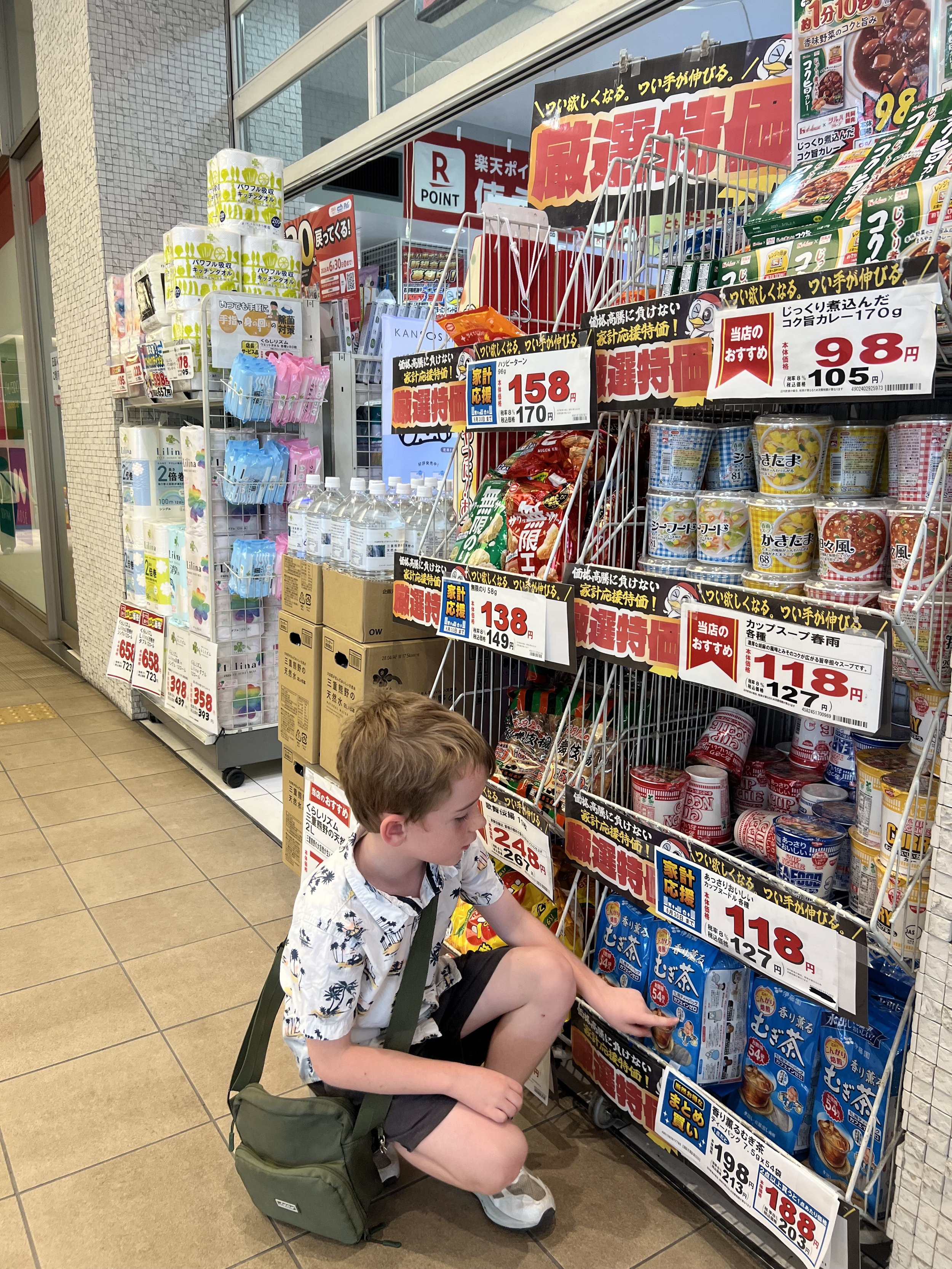
Ari lkes looking at the different instant noodles and lunch options when we are walking around, exploring Japan
The prepared food sections are incredible.
Fresh sushi, bento boxes, fried chicken, noodle dishes, rice meals, salads, sandwiches, fruit, desserts — and everything is beautifully presented.
For our family, buying six restaurant meals at once can still add up. Supermarkets have become one of our favourite budget-friendly options.
I'll often give the kids a small budget and let them choose their own meals. Then I'll add fruit, yoghurt, and maybe a packet of popcorn (often around $1) for afternoon snacks, and we're good to go.
It's also perfect for a picnic in the park or an easy dinner back at the accommodation after a big sightseeing day.
Convenience Stores Are Nothing Like Home
I never thought I'd be recommending convenience store food.
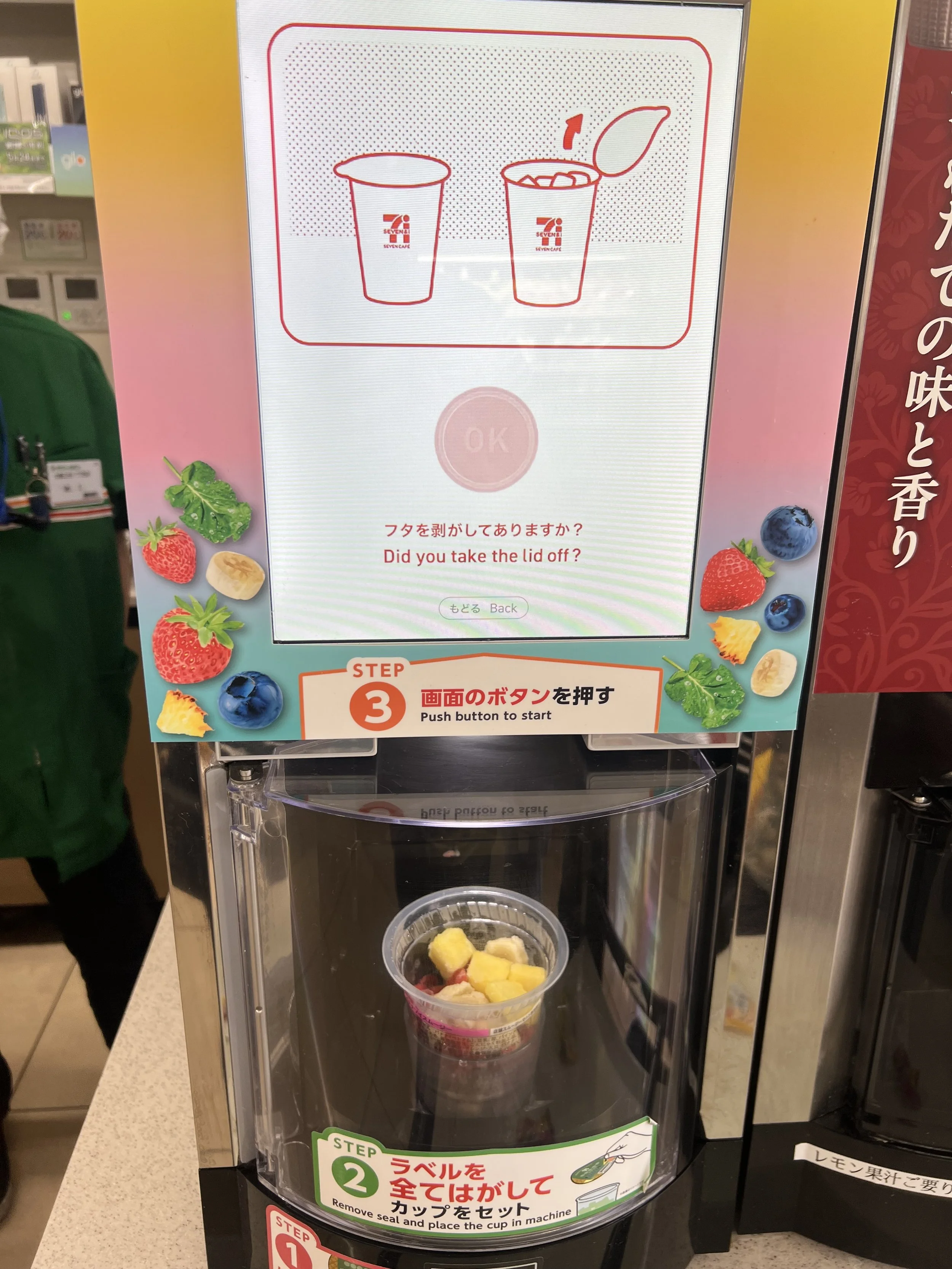
fresh smoothies are available in most convenience stores and are so affordable and great for kids if its a hot day or breakfast on the go.
Yet here we are.
Back in Australia, I couldn't even tell you what convenience store food tastes like because we've rarely eaten it. Maybe the bucket of chips at a roadside stop, but that's about it.
Japan is completely different.
Stores like 7-Eleven, Lawson, and FamilyMart have become regular stops for our family. The food is fresh, affordable, and constantly being restocked because turnover is so high.
The sandwiches are soft and fresh, the selection is enormous, and there are genuinely healthy options available.
Some of our regular purchases include onigiri (or as my kids call it triangle sushi), sandwiches, boiled eggs, salads, fried chicken, sushi packs, yoghurt drinks, smoothies, bakery treats, and noodle cups.
One thing the kids especially love is grabbing something quickly before hopping on the next train.
Many stores even provide hot water for noodle cups, which is super convenient when you're on the go exploring.
And yes, Mum and Dad occasionally treat themselves to a frappe as well, they are only a couple of dollars, a lot cheaper than home.
Finding Somewhere to Eat Can Be Harder Than Finding Food
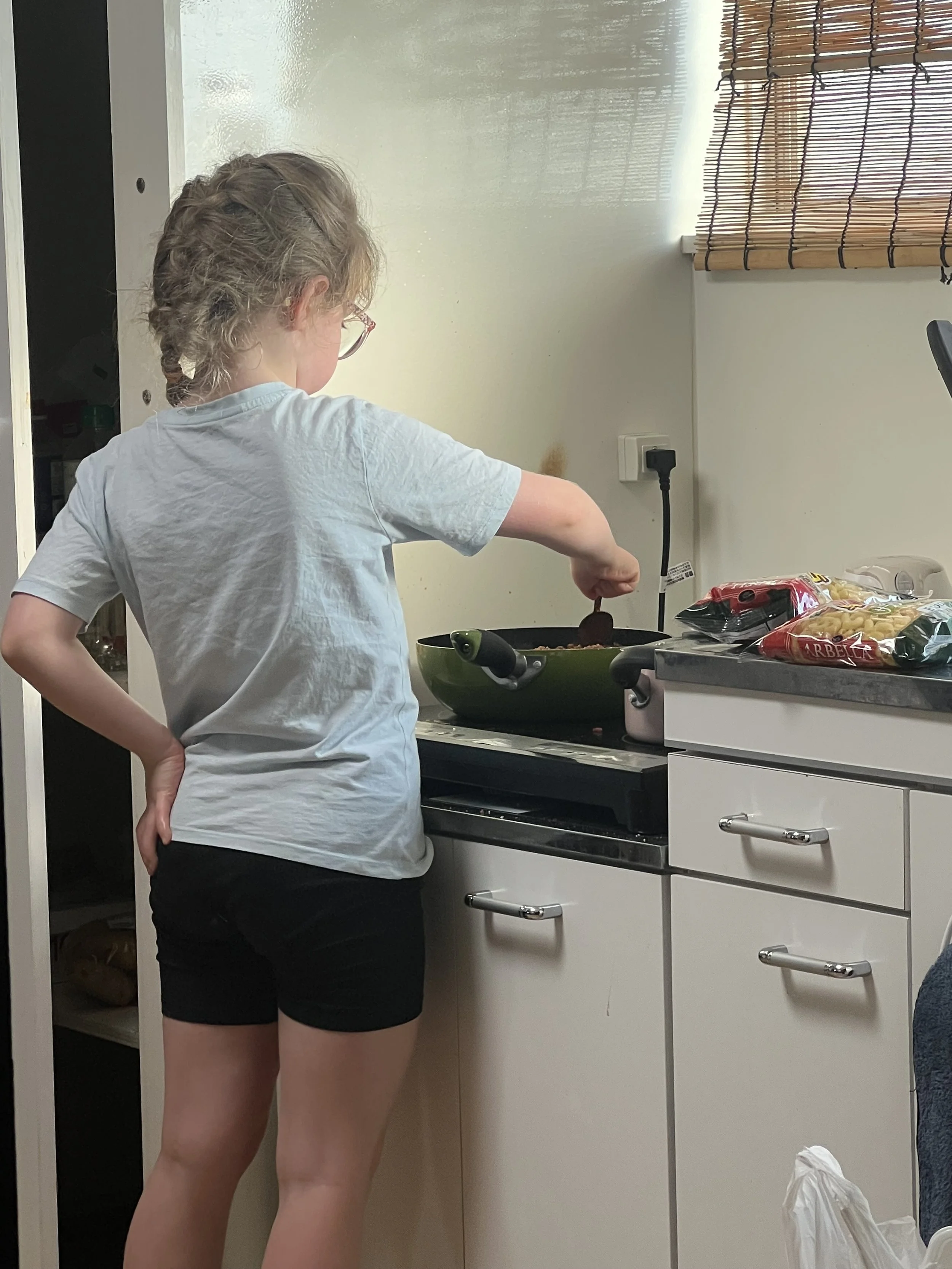
cooking at home is always going to save you money in the long run. If you can find accommodation with a kitchen, even just a kitchentte with a few useful appliances could be a game changer for the budget.
One thing that surprised us when we arrived in Japan was the lack of walking and eating.
It's simply not as common here as it is in many other countries.
There are also fewer grassy picnic areas than we expected. Plenty of parks, but often a lot more concrete than lawn.
If you love sitting under a tree with some snacks and letting the kids run around, I'd highly recommend bringing a small picnic mat.
Otherwise, there's a good chance you'll end up sitting in the dirt.
These days we always think about where we're going to sit before we buy food, how far we need to walk to the location etc..
Parks, playgrounds, food courts, train station seating areas, public benches, and convenience stores with eating spaces are not always easy to find.
Pack Some Basic Cutlery
This sounds like a strange tip until you need it.
Many places provide chopsticks, but forks and spoons aren't always available.
You can usually ask for cutlery at the checkout, but we've forgotten plenty of times and found ourselves staring at a delicious curry rice meal with absolutely no way to eat it.
If you're travelling with younger children, or kids who haven't quite mastered chopsticks yet, a lightweight travel cutlery set can be incredibly handy.
Or simply grab a few extra disposable spoons and forks when you remember.
It's one of those tiny travel items that gets used far more than you'd expect. Oh and don’t forget your portable plastic rubbish bag, bins are scarce in Japan, and it is common to take your rubbish back home with you, or to your hotel.. So make sure you have some trash bags with you in your day bag, you never know you might get lucky and find a rubbish bin.
Refill Water Bottles Whenever You Can
One thing we've loved about Japan is how easy it is to stay hydrated without constantly buying drinks. Coming from Japan it was so nice to be able to fill our drinkbottles up with tap water because here it is safe to drink, so thats what we do, we regularly refill our bottles throughout the day.
It doesn't sound like much, but when you've got four kids running around in warmer weather and drinking litres between them, the savings add up surprisingly quickly.
Enjoy the Vending Machines... But Be Strategic
You can't come to Japan and not use the vending machines.
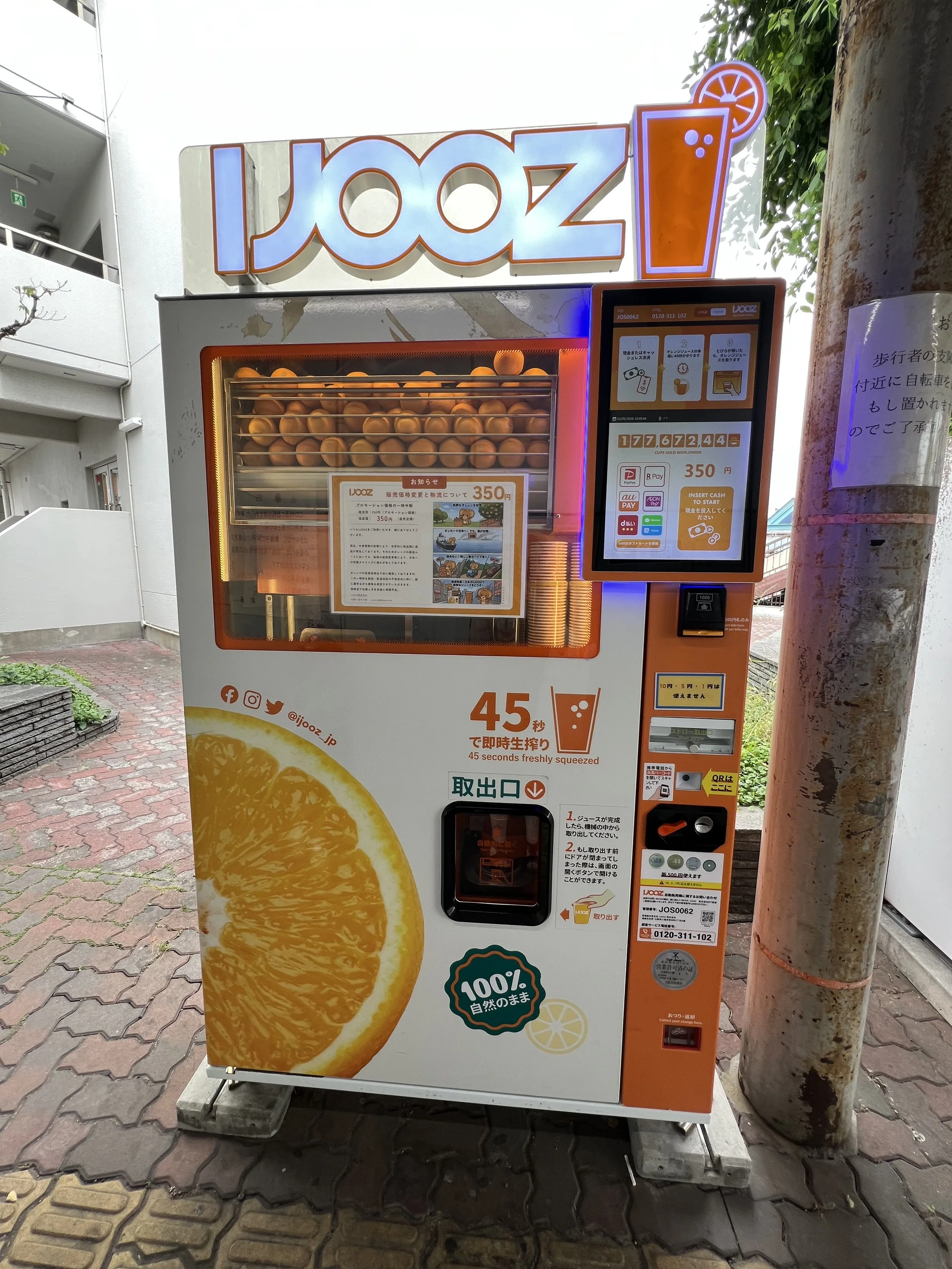
Vending Machines are Honestly Everywhere!!! Fresh Juice, Hot Food, Soda, Coffee (not our personal taste), Ice-cream, Toys, and Alcohol for the Adults
They're absolutely everywhere.
We've seen machines selling soft drinks, fresh orange juice, noodles, dumplings, ice cream, and all sorts of other things.
Trying the weird and wonderful vending machine options is honestly part of the experience.
One thing to be aware of is that not every vending machine accepts debit or credit cards.
Many accept cash and transport cards such as Suica, PASMO, and ICOCA, but it's always worth carrying a little cash just in case.
One Final Tip: Eat Before You Enter Attractions
We learned this lesson the hard way.
Japan is often very strict about eating and drinking inside attractions.
We've been caught out several times in museums and even larger attractions like the Osaka Aquarium.
On one occasion, I pulled out an onigiri for one of the kids to snack on while we walked around and was politely asked to put it away because food and drinks weren't permitted, at one museum we went too, I was told firmly i wasn’t able to drink water either.
Every mum knows how frustrating it is when hungry kids suddenly need food right after you've finally made it through the entrance.
It's even trickier because many attractions operate on timed entry, so leaving isn't always straightforward.
Luckily, on that particular day, the marine life was distracting enough to buy us some time.
But we've definitely had other occasions where we needed to leave because the kids were absolutely famished.
These days, I make sure everyone has a snack before we enter.
That simple habit usually buys us a couple of hours to explore happily without hearing, "Mum, I'm hungry" five minutes after we've walked through the gate.
So, Is Japan Expensive for Food?
Honestly, not really.
Not if you're willing to eat the way many locals do.
Between lunch specials, supermarkets, convenience stores, bakery treats, and a little bit of planning, we've found Japan surprisingly affordable for feeding a family.
In fact, it's been one of the easiest countries we've travelled through when it comes to finding fresh, convenient, and budget-friendly food that our kids genuinely enjoy eating.
And that's a win in any parent's book.