Our First Vietnam to Laos Visa Run: Everything We Learned (So Yours Is Easier!)
One of the biggest differences between taking a holiday and embracing slow travel is that eventually... visas become part of everyday life.
At a Glance: Our Vietnam to Laos Visa Run
Route: Huế → Lao Bảo border → Laos → back to Huế, by private car (a full-day return trip).
Who: Our family of six — two adults and four children.
Total cost: Approximately AU$1,135 for the whole family.
Time needed: A full day — we left at 5am and were home by late afternoon.
You must actually enter Laos: Complete the Laos Visa on Arrival (US$40 per person), get your stamp, then re-enter Vietnam on your new visa.
Don’t forget: US dollars for the Laos Visa on Arrival, one passport photo per person, a pen for the forms, and plenty of snacks.
Heading to Vietnam first? Two things worth sorting before you fly are Vietnam’s new Digital Arrival Card and the new Health Declaration — both are now required, and I’ve written a family guide to each.
Before we started travelling full-time, I'd never even heard the term "border run."
It sounded slightly adventurous... slightly illegal... and if I'm honest, I pictured people making a dramatic dash across a border somewhere.
Turns out it's nowhere near that exciting.
It's mostly paperwork... waiting... kids asking for snacks ... and hoping you've remembered all the right documents.
Earlier this week our family of six completed our very first visa run from Huế, Vietnam, to the Laos border.
I'll admit, I was nervous.
There was surprisingly little information out there for families, especially bigger families like ours. Most of what I learned came from hours of scrolling through expat Facebook groups, reading blogs, asking ChatGPT a million questions and hoping I wasn't forgetting something important.
So I thought I'd put everything we learned into one place.
These aren't rules.
They're simply recommendations based on what worked for our family.
You might decide to do things completely differently, and that's absolutely fine. But hopefully our experience makes your own border run just that little bit less daunting.
What actually is a border run?
A border run simply means leaving a country before your visa expires and re-entering on a new one.
Many countries only allow tourists to stay for a certain period of time. If you're embracing slow travel and staying for months rather than weeks, there's a good chance you'll eventually need to leave the country—even if it's only for a few hours—before returning on a fresh visa.
For us, that meant driving from Huế to the Laos border, officially exiting Vietnam, entering Laos, then turning straight back around and re-entering Vietnam once our new visas had been approved.
Simple in theory...
Slightly more complicated when you throw four children into the mix.
How much should you budget?
This will obviously vary depending on your family size and how you choose to travel, but to give you a rough idea, here's what our family of six spent on our Laos border run from Huế.
Vietnam e-Visas (arranged through our visa agent): AU$628.94 (this included two re-entry visas, which cost more than a standard 90-day single-entry visa).
Laos Visa on Arrival: US$40 per person (check the current pricing before you travel).
Private driver from Huế to Lao Bảo and return: 2.3–2.5 million VND (approximately AU$135.55).
Passport photos: 50,000 VND per person (approximately AU$2.71 each).
Snacks and drinks: We packed almost everything from home, so we only spent around AU$10 on coffees and a couple of Pepsis for the kids.
In total, we spent approximately AU$1,135 for our family of six.
It certainly isn't the cheapest day out, especially for a larger family, but when you compare it to paying for flights out of Vietnam or spending a few nights in another country, it was by far the most practical and cost-effective option for us.
If you're travelling as a couple or a smaller family, your costs will obviously be significantly lower, as many of the biggest expenses are charged per person.
1. Use a good visa agent
If there's one piece of advice I would give anyone, it's this...
Use a reputable visa agent.
Ironically, the whole reason we had to do this border run in the first place was because we tried to save a little money.
We'd used a different provider for our visas this time around because they were slightly cheaper.
Unfortunately, they organised one-month visas instead of the three-month visas we'd requested.
Lesson learned.
This time we went back to Emily Visa, who we've used several times before.
Brad and Hannah needed multiple-entry visas because they're flying to Borneo for our Worldschool Camp, while myself and our other three children only needed standard three-month single-entry visas.
Emily handled everything.
She told us exactly what paperwork she needed, when she needed copies of our passports, when to send photos and what would happen throughout the process.
Everything was done through Facebook Messenger.
In fact, despite using her several times, we've never actually spoken on the phone! I only recently discovered she's based in Ho Chi Minh City.
The only thing we needed to do during the border run was send her a photo of the Vietnamese exit stamp (the red stamp showing we'd officially left the country).
Once she had that, she took care of everything else.
For me, paying someone who does this every single day was worth every cent for the peace of mind alone.
2. Organise private transport if you're travelling with children
There are companies that offer organised visa-run tours where you travel as part of a group.
That works brilliantly for lots of people.
For us...
Not so much.
Travelling with four children means absolutely anything is possible.
Someone might suddenly need the toilet.
Someone could get car sick.
Someone could have a meltdown because their sibling looked at them the wrong way.
You just never know.
Initially we even looked at hiring a 16-seater bus so everyone could spread out.
Unfortunately that fell through, so we ended up hiring a private driver and a 7 seater car instead.
Looking back, I'm actually really glad we booked a private vehicle to take us,
It meant we could stop whenever we needed to, and I wasn't constantly worrying about whether our family was disturbing everyone else on a shared bus.
Thankfully our kids were amazing.
A little bribery involving Minecraft and the promise of a new toy at the end of the day may or may not have been involved...
No judgement please.
Whatever works.
3. Get your passport photos organised beforehand
This was another little tip I only discovered after spending far too many hours researching Facebook expat groups.
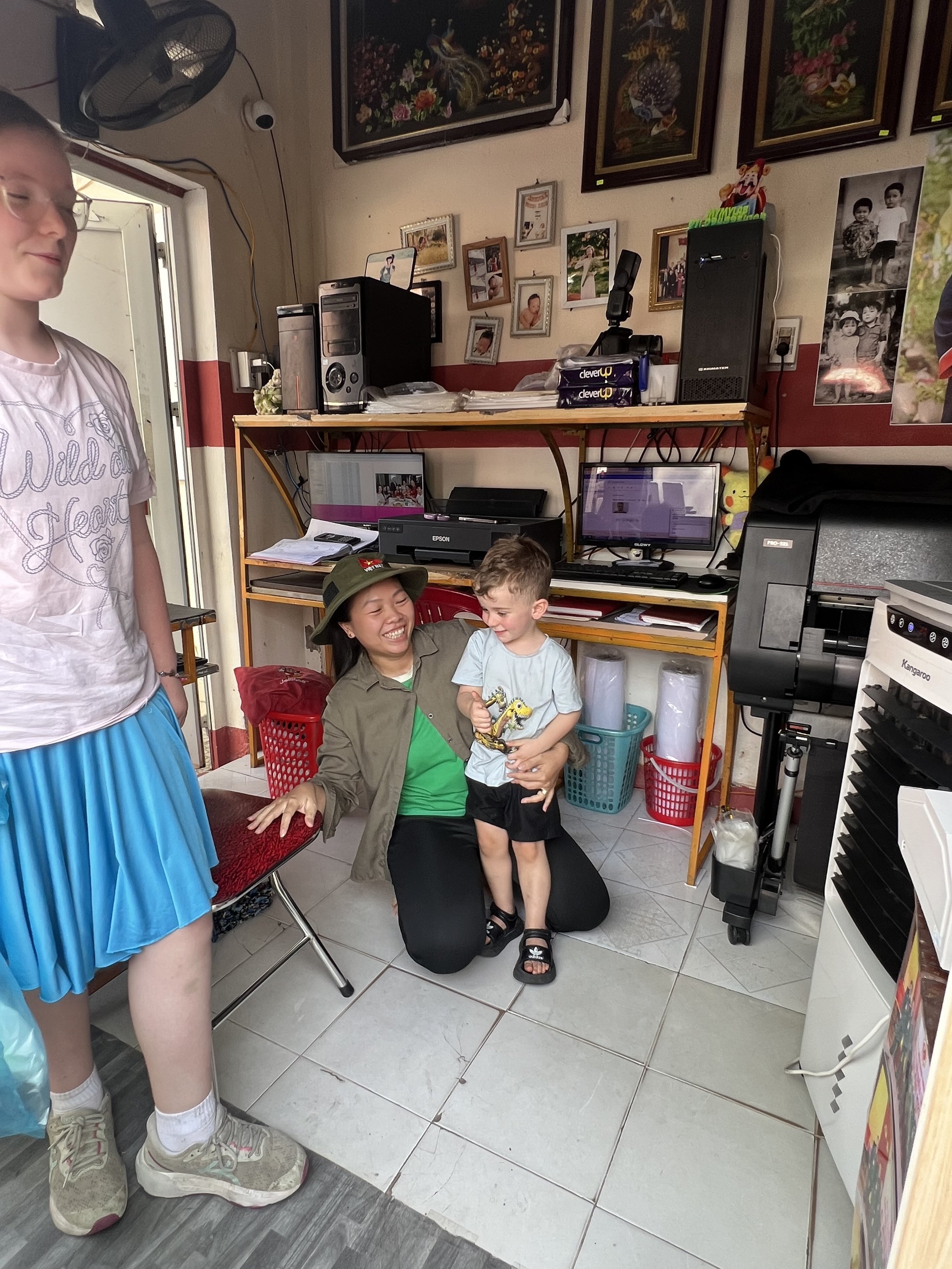
We already had digital photos on our phones from our previous visa applications, so rather than paying to have a whole new set of passport photos taken, I wondered if we could simply have those edited into the correct size.
Turns out...
Absolutely!
I found a little photo printing shop close to where we're staying in Huế. I walked in, explained what we needed the photos for, then while sitting next to the lady I simply emailed our photos straight from my phone.
Within minutes she'd resized them, edited them to passport photo standards and printed six copies for every family member.
The cost?
Just 50,000 VND per person.
We only needed one passport photo each for the Laos Visa on Arrival, but I've heard some countries require two, so having a few spare copies tucked away is never a bad idea.
If you're based in Huế and need passport photos yourself, I've included the details of the little print shop we used called Tiệm Ảnh Mỹ Mỹ Lab in Huế here. They were quick, affordable and I'd happily recommend them.
4. Organise your US dollars well before your visa run
This was honestly the most frustrating part of the whole preparation.
The Laos Visa on Arrival needs to be paid in US dollars or Lao Kip.
As Australians, walking into a Vietnamese bank and asking to exchange Vietnamese Dong into US dollars turned into a two-hour adventure involving paperwork, multiple staff members, photocopies and plenty of confused looks.
If I could do it all again, I would organise the US dollars when I first exchanged money after arriving in Vietnam.
It would have saved us so much time.
I did notice an ATM at the border, but there was no way I could leave it until then. Knowing my luck, it would have been out of service on the one day I actually needed it, and I just couldn’t risk that.
I’m definitely a “prepare now so future me doesn’t panic later” kind of person.
5. Find a driver you trust
You may already have a driver you've gotten to know while living in Vietnam.
If not, Facebook expat groups are a great place to start.
Tour companies can usually recommend drivers too.
For us, finding someone familiar with the route was really important.
This isn't a quick Grab ride across town.
You're going to spend the better part of a day in that vehicle together, travelling at much higher speeds than you're used to around the city.
Don't feel awkward asking questions beforehand or even meeting your driver before the trip if that gives you peace of mind.
Things I'd check include:
Seatbelts
Air conditioning
Enough room for everyone
A clean and well-maintained vehicle
These little things make a very long day much more comfortable.
Thankfully, we organised our driver through Hoi An Wonderlust, the local tour company we partner with for our Worldschool Camps. They've looked after us on several occasions while travelling around Vietnam, so they already know our family well, understand what we need, and we completely trust them to find the right driver.
That peace of mind was one less thing to worry about on an already big day.
6. Prepare your kids
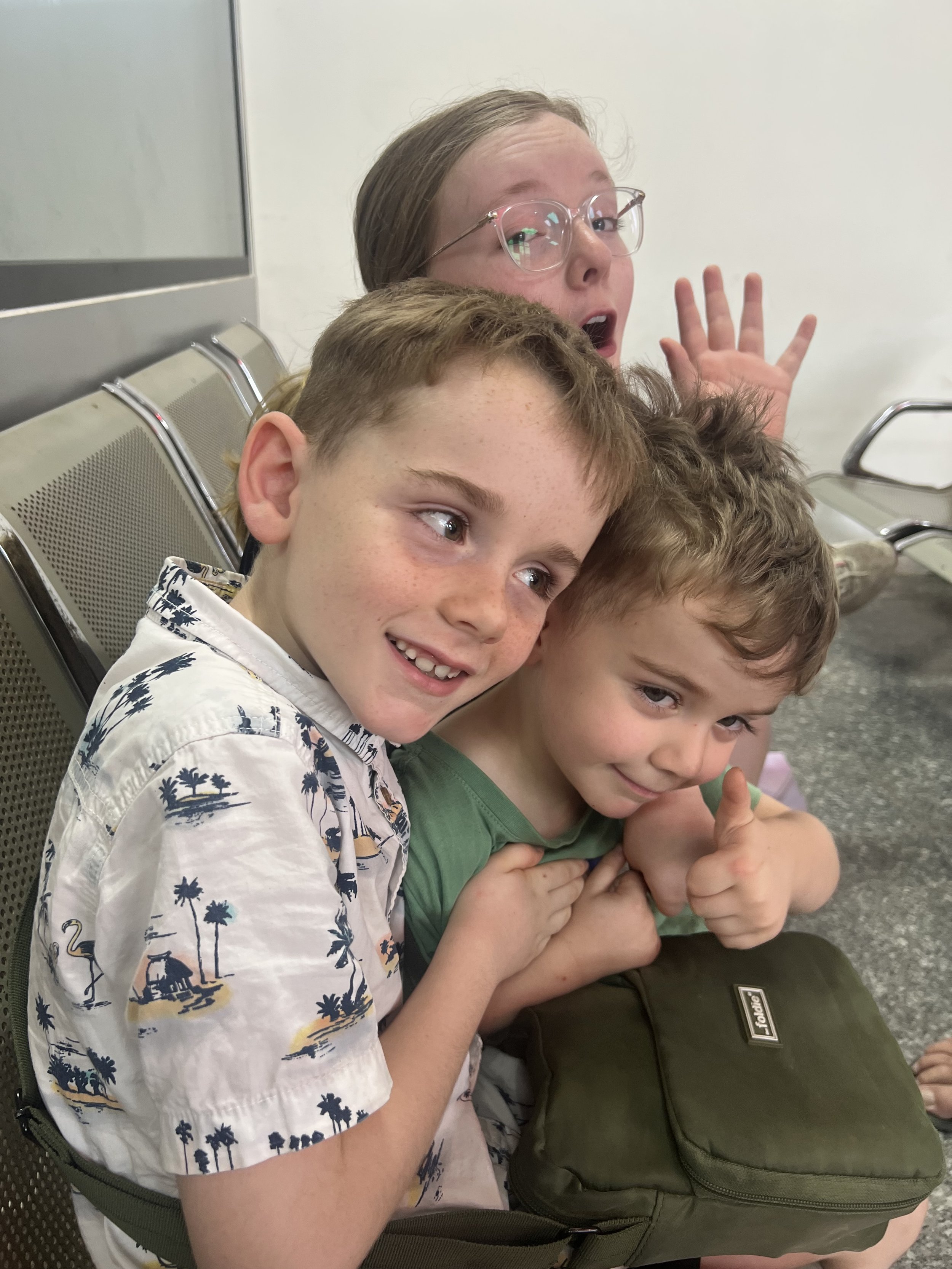
Our kids knew exactly what to expect, and I really do think that helped. They knew there would be a long car ride, plenty of waiting around, and, of course... lots of snacks.
One thing they actually enjoyed was watching all the trucks and cars pass through the border checkpoints and spotting themselves on the security screens as they walked through.
Before we left, we sat down with our children and explained everything.
Why we had to do the trip.
Why everyone needed to come.
What a visa actually is.
What the day would probably look like.
Kids cope so much better when they know what's happening.
And, being a homeschool mum, I couldn't let an opportunity like this pass without turning it into a learning experience too. We talked about countries, borders, passports, visas, maps, currencies and why different nations have different entry requirements.
Looking back, I definitely think taking the time to have those conversations beforehand made the whole day run much more smoothly.
One thing to be aware of, though, is that there are quite a few stray dogs around the border. As animal lovers, we found that a little confronting. It was also something we needed to prepare for, as our daughter Maddie has cynophobia (a fear of dogs). Thankfully, we managed it just fine, but it's worth keeping in mind if anyone in your family is nervous around dogs.
7. Pack more food than you think you'll need
If you're a mum...
You probably already know where this is going.
As usual, I overpacked.
And honestly...
I'm so glad I did.
We left home at around 5am.
Trying to convince four sleepy children to eat a proper breakfast at that hour wasn't exactly successful.
I'd bought croissants, but I didn't really want buttery crumbs spread throughout the car before sunrise.
Instead, I'd packed apples, and they ended up being the perfect first breakfast. They kept everyone happy until our first (and only) stop, where the croissants finally made their appearance.
Along with that, I'd packed frozen drink bottles, sandwiches, fruit, snacks... basically enough food to survive what felt like a small natural disaster.
There are little shops along the way and at the border if you need them, but they're fairly limited. Realistically, you don't want to be stopping every hour anyway.
Our goal was one stop on the way there and one stop on the way home, and thankfully that's exactly how the day unfolded. Every extra stop just makes an already long day feel even longer.
One thing we hadn't expected was the number of children begging on both the Vietnamese and Laos sides of the border. It was quite confronting. On the Vietnamese side, we watched the border guides gently move the children away several times.
By the end of the day, we had plenty of leftover snacks, so we handed most of them out before heading home.
If you're planning the same trip, it might be worth throwing a few extra fruit boxes or individually wrapped snacks into your bag. It's a small gesture, but one that could brighten a child's day.
And besides...
If you've travelled with kids before, you already know the golden rule.
It's always better to bring too many snacks than not enough.
8. You actually have to enter Laos
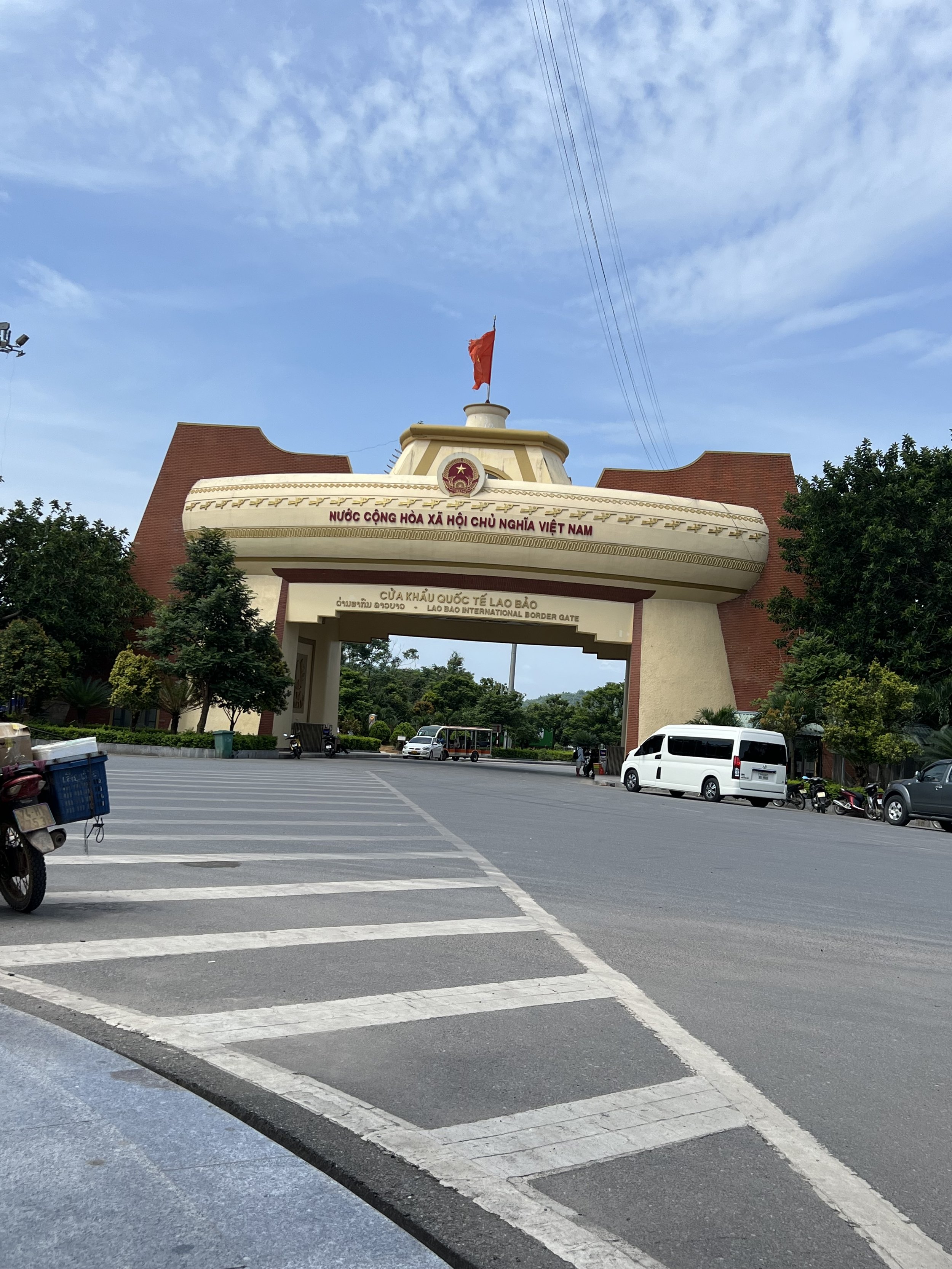
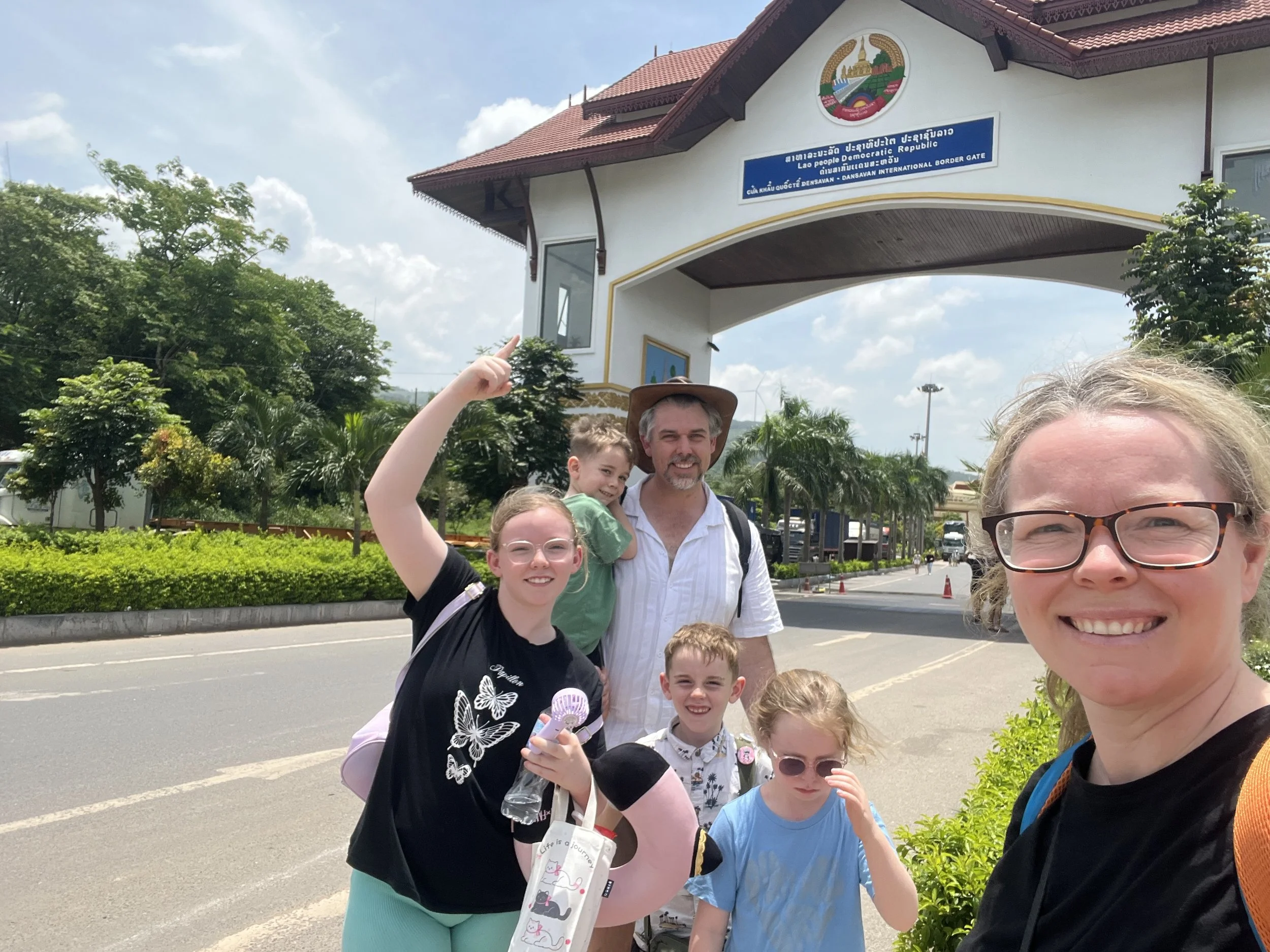
At the Laos border, you need to go through here—once you’ve passed out of Vietnam—to get your arrival stamp and VOA, and to then also exit the country back to Vietnam.
This was probably my biggest rookie mistake.
For some reason, I'd convinced myself we could simply exit Vietnam, get our passport stamped, turn around and walk straight back in.
Nope.
You actually have to enter Laos.
That means completing the Laos Visa on Arrival paperwork, paying the visa fee, receiving your visa, getting another passport stamp... and only then can you turn around and head back to Vietnam.
Looking back, it seems obvious.
At the time?
Not so much.
So hopefully I've just saved someone else from making the same assumption I did! i guess the excitement of saving some serious $$ got the better of me.
9. The border crossing was much easier than I expected
After reading so many stories online, I'd honestly built the whole experience up in my head.
In reality, it was surprisingly straightforward.
Yes, there were several windows to visit.
Yes, there was a bit of waiting around.
But the staff directed us where to go, and we simply followed the process one step at a time.
It wasn't nearly as intimidating as I'd imagined.
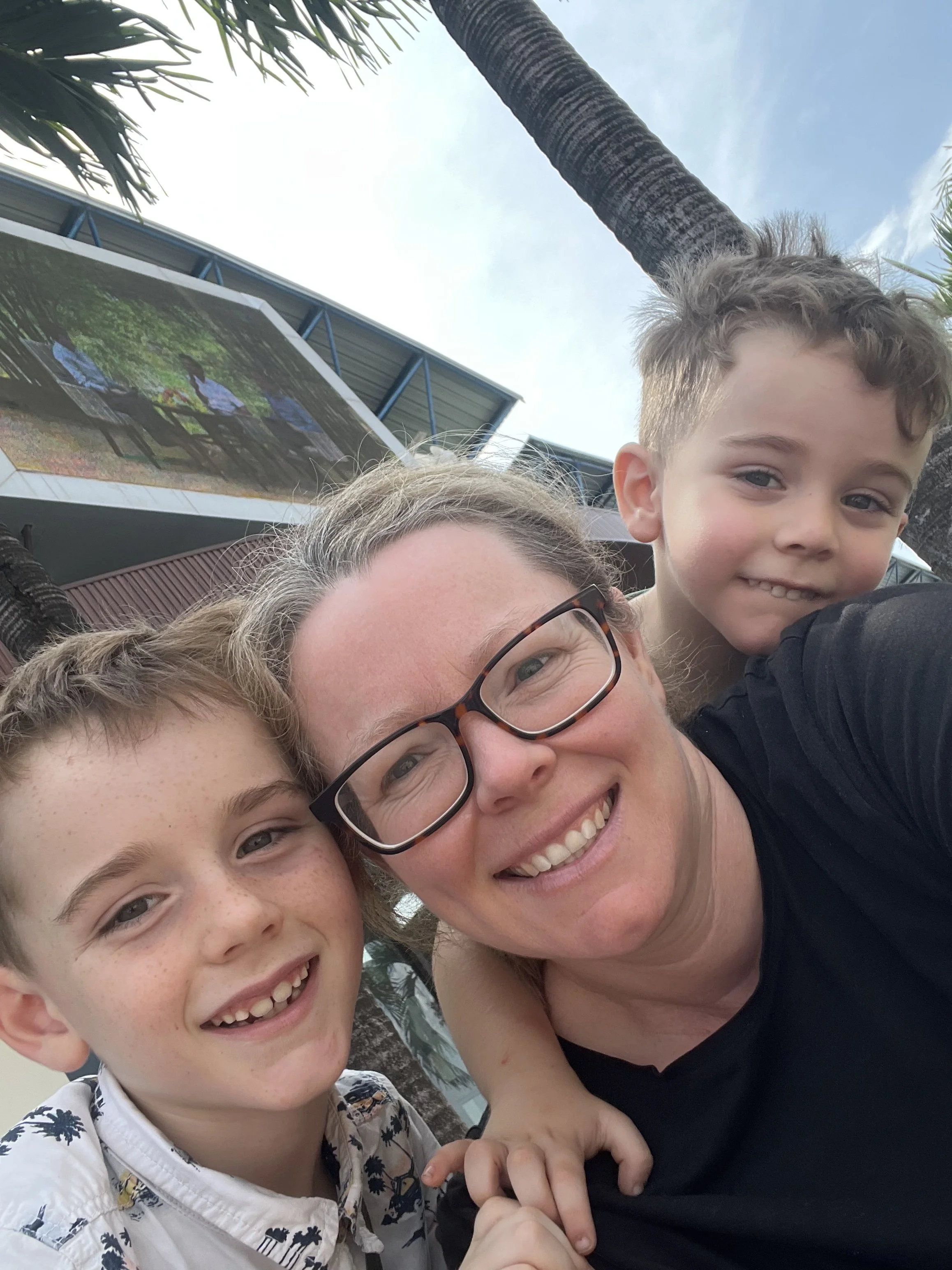
My boys and I decided to take selfies and watch the trucks drive by while we waited for our new visa to be processed.
10. Allow more time than you think you'll need
Even if everything goes smoothly, border crossings take time.
There are forms to complete (side note: bring a pen!).
Passports to process.
Visas to wait for.
More passport processing.
Lots of processing.
Queues that seem to move quickly... until they suddenly don't.
Our family of six was travelling together, so naturally everything took a little longer than it would for a solo traveller.
My advice?
Don't book anything important for later that afternoon.
In fact, if you can, keep the following day fairly clear too. We always seem to be completely wiped after a big travel day, and a visa run is no exception.
Go into the day expecting it to take most of the day, and if you're home earlier, it'll feel like a bonus.
11. Sometimes the journey becomes part of the adventure
By the time we'd finished at the border, we'd all had enough of waiting.
Well... almost all of us.
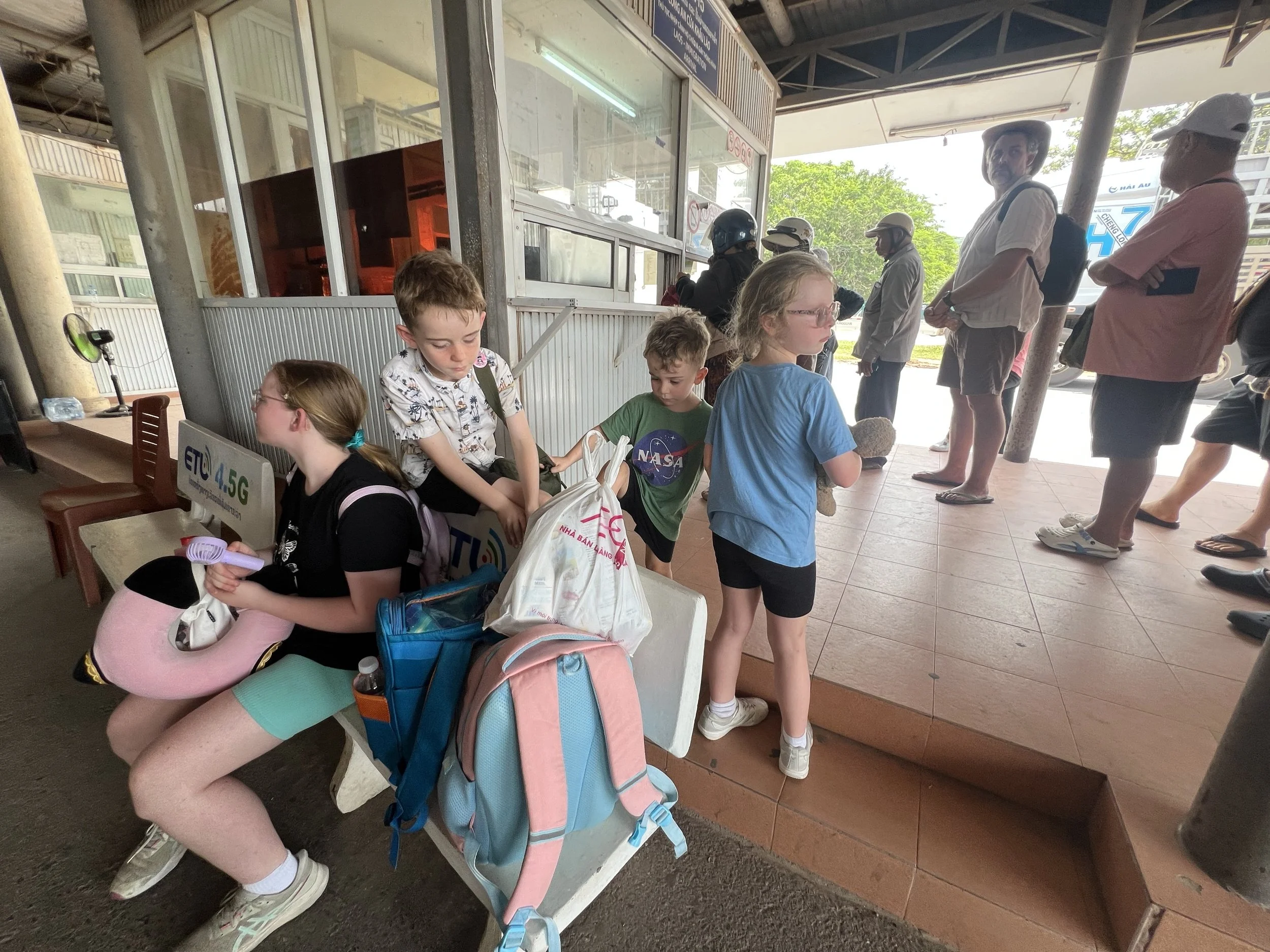
Waiting in the wrong line at the Laos border—we were in the arrivals line, when we needed to be in the departures one around the other side of the building.
Brad had one more idea.
"We're this close to Khe Sanh... we should go have a look."
The idea had been inspired by the famous Cold Chisel song, and I could see exactly where this was heading.
One look from me was all it took.
He knew it wasn't going to happen.
Don't get me wrong—I absolutely love sightseeing.
Just not on a border run day.
After a 5am start, hours in the car, multiple passport queues and enough paperwork to last a lifetime, all I wanted to do was point the car back towards Huế.
Having said that, I'd genuinely love to come back and spend some time exploring Khe Sanh properly one day. It's a place with such an important history, and as Australians, I think many of us recognise the name because of the Cold Chisel song that became closely associated with the Vietnam War experience for so many Australian soldiers.
Needless to say...
Khe Sanh will still be there another day.
12. It wasn't nearly as scary as I'd imagined
Would I describe a border run as fun?
Probably not.
Would I stress about doing it again?
Also no.
Like most things in life, it felt much bigger before we actually did it.
Once we'd been through the process ourselves, it all made sense.
Now we'd happily do it again knowing exactly what to expect.
13. My biggest piece of advice
If I had to sum everything up into one piece of advice, it'd be this...
Don't overthink it.
Get your visa organised.
Find a driver you trust.
Pack more snacks than you think you'll need.
Take your passport photos beforehand.
Bring your US dollars.
Explain the day to your kids.
Then simply take one step at a time.
Before you know it, you'll be back in Vietnam wondering why you spent so much time worrying about it in the first place.
If you're planning your own Laos border run from Huế and have any questions at all, feel free to leave them in the comments.
If I can help make the process a little less stressful for another family, I'm more than happy to share what we learned along the way.
Frequently Asked Questions
What is a visa run (border run)?
A visa run means leaving a country before your tourist visa expires and re-entering on a fresh one. For long-term slow travellers who stay for months rather than weeks, it’s often the simplest way to legally extend your time in a country.
How much does a Vietnam to Laos visa run cost for a family?
Our family of six spent roughly AU$1,135 in total. That covered our Vietnam e-Visas (including two re-entry visas), the Laos Visa on Arrival at US$40 per person, a private driver from Huế to Lao Bảo and back (about AU$135), and passport photos. Because most costs are charged per person, couples and smaller families pay significantly less.
Do you actually have to enter Laos on a Vietnam visa run?
Yes — you can’t simply exit Vietnam and turn back at the border. You must complete the Laos Visa on Arrival, pay the fee and get your Laos entry stamp before you can cross back into Vietnam on your new visa.
How long does the Vietnam to Laos border run take?
Plan for a full day. With an early start from Huế, driving time to the Lao Bảo border, several passport windows and waiting for visas to process, it’s an all-day trip — it’s best not to schedule anything important for that afternoon.
What do you need for the Laos Visa on Arrival?
You’ll need a passport valid for at least six months, one passport photo per person, and US$40 per person in US dollars or Lao Kip. Bring a pen for the forms, and organise your US dollars well in advance rather than at the border.